Can Lifestyle and Dietary Changes Prevent Bladder Stones
The commencement pace in the prevention and management of bladder stones is to beverage a large volume of water to help flush out any pocket-size stones in the bladder to be excreted in the urine.
However, a surgical procedure may be required to remove bladder stones, specially if the stones are large or the bladder does not empty entirely. Following the removal of stones, any underlying crusade should be identified and appropriately managed to prevent the recurrence of bladder stones.
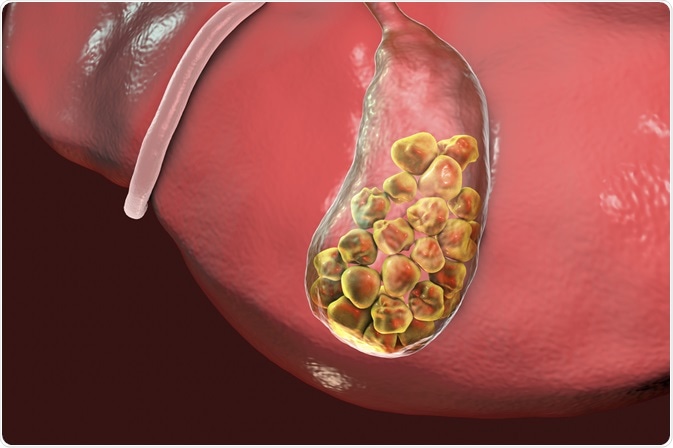
Prototype Credit: Kateryna Kon / Shutterstock
Prevention of Bladder Rock
Individuals with recurrent urinary tract infections (UTIs) are at an increased risk for bladder stones forming and may benefit from techniques to foreclose them. These include:
- Increasing fluid intake to lower urine concentration (2-3 liters a day)
- Regular emptying of the bladder
- Double voiding to increasing emptying of urine from the bladder
- Using laxatives to avoid constipation
These techniques are oftentimes beneficial and help to stop the formation of bladder stones with minimal adverse effects on the private.
Transurethral Cystolitholapaxy
Transurethral cystolitholapaxy is a procedure that is commonly used to remove bladder stones in adults. The procedure involves the insertion of a cystoscope into the urethra, which is gentle pushed upward into the bladder. The modest photographic camera at the end of the cystoscope helps to locate the stones, which can then be broken into fragments with lasers or ultrasound waves that are transmitted from the cystoscope. The resulting smaller pieces can ordinarily be excreted when the patient next passes urine.
This procedure occurs under a local or general coldhearted so that it is painless for almost patients. Some individuals may larn a urinary tract infection following the procedure and, for this reason, a short course of safety antibiotics is routinely prescribed. Other complications may include injury to the bladder.
Percutaneous suprapubic cystolitholapaxy
Percutaneous suprapubic cystolitholapaxy is a process normally used for young children to reduce the take chances of urethral harm only tin can as well be used for some adult patients.
Information technology involves a small incision in the lower abdominal pare and the bladder to let the straight removal of the stones. This is normally carried out nether full general anesthetic.
Open cystostomy
Open cystostomy is a procedure used for very large stones or men with an enlarged prostate. It involves a large incision in the abdomen and bladder to remove the rock and may be combined with other purposes to remove role of the prostate gland or float diverticula, depending on the specific case.
This procedure is associated with more astringent hurting following the surgery and a longer recovery time when compared to other procedure types. All the same, it is the only option in some cases, such as when the float stone is large.
Underlying Cause
Post-obit the removal of the float stones, it is important to identify any underlying causes that may lead to the formation of new stones in the bladder. These tin then be prevented by:
- Reduction of prostate enlargement with medication or surgery to decrease the pressure on the bladder.
- Use of catheter to help bleed bladder if it doesn't empty entirely (e.g. neurogenic bladder)
- Use of pessary or surgical procedures to hold the bladder in position if cystocele is present
- Surgical removal of float diverticula
This is an important pace, as patients with these conditions are susceptible to the recurrence of bladder stones.
References
- http://www.nhs.uk/conditions/bladder-stones/pages/introduction.aspx
- http://www.nhs.uk/Atmospheric condition/Float-stones/Pages/Treatment.aspx
- http://emedicine.medscape.com/article/2120102-treatment#showall
- http://world wide web.mayoclinic.org/diseases-weather/bladder-stones/basics/treatment/con-20030296
- https://www.nlm.nih.gov/medlineplus/ency/commodity/001275.htm
Further Reading
- All Bladder Stones Content
- Symptoms and Diagnosis of Bladder Stones
- What Are Cystoscopy and Ureteroscopy?
Source: https://www.news-medical.net/health/Prevention-and-Management-of-Bladder-Stones.aspx
0 Response to "Can Lifestyle and Dietary Changes Prevent Bladder Stones"
Post a Comment